
Male pattern hair loss (androgenetic alopecia) affects roughly 50 million men in the U.S. The treatment market spans FDA-approved drugs, natural supplements, topical treatments, and emerging therapies.
FDA-Approved Treatments
Only two drugs are FDA-approved for male pattern hair loss:
- Finasteride (Propecia, 1mg/day): Oral 5-alpha reductase inhibitor that reduces DHT by ~70%. Prevents further loss in 86% of men and produces visible regrowth in 65%. Side effects (sexual dysfunction in ~2-4%) are the primary concern.
- Minoxidil (Rogaine, 5% topical): Topical vasodilator. Moderate regrowth in 40-60% of users. Must be applied continuously — stopping reverses gains. Now available OTC.
Natural DHT Blockers
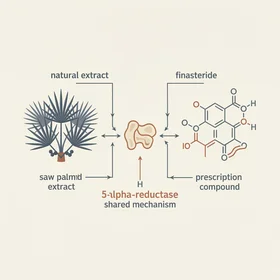
For men who prefer non-pharmaceutical options or want to complement prescription treatment:
- Saw Palmetto (320mg/day, liposterolic extract): The most studied natural 5-alpha reductase inhibitor. Multiple studies show modest hair count improvements, though effects are smaller than finasteride. Standardized extracts (85-95% fatty acids) are essential.
- Pumpkin Seed Oil (400mg/day): A 2014 RCT showed 40% increase in hair count over 24 weeks — one of the stronger results for a natural compound.
- Beta-Sitosterol: Plant sterol that may complement saw palmetto's mechanism. Evidence is primarily for prostate support, with hair benefits extrapolated from the shared DHT pathway.
Emerging Therapies
- Low-Level Laser Therapy (LLLT): FDA-cleared devices. Growing evidence for stimulating follicle activity. Best as an adjunct, not standalone.
- Platelet-Rich Plasma (PRP): Injections of concentrated growth factors. Promising but expensive, variable, and not standardized.
- JAK Inhibitors: Remarkable results for alopecia areata. Not yet proven for androgenetic alopecia, but research is active.
- Low-Dose Oral Minoxidil (2.5-5mg): Growing off-label use. More convenient than topical with potentially better systemic effects. Requires blood pressure monitoring.
The Market Shift
The global hair loss treatment market is projected to reach $13 billion by 2028. Direct-to-consumer telehealth (Hims, Keeps, Roman) has dramatically increased prescription access — putting pressure on the supplement segment to differentiate on evidence and transparency. Natural DHT blockers occupy a specific niche: men who want to act proactively with non-pharmaceutical options, or those complementing prescription treatments with additional support. For the related science on growth hormone, see our HGH research coverage.